
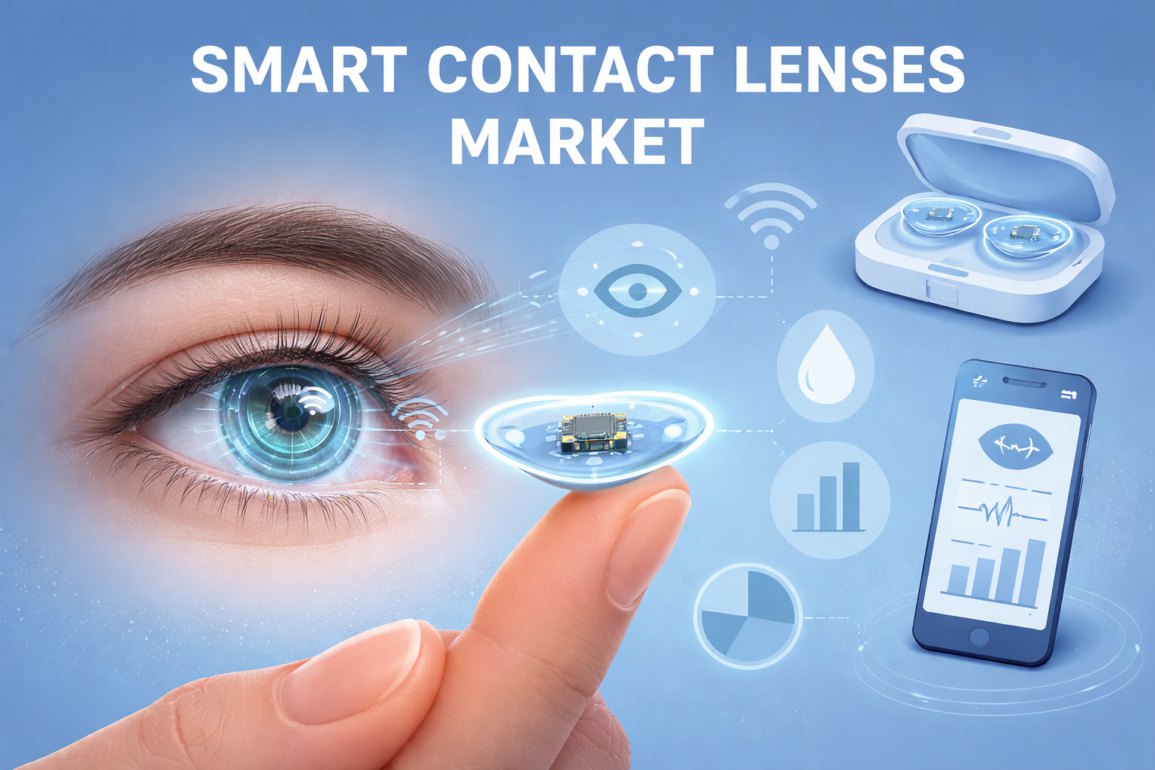
The future of personal technology and preventative healthcare is focusing on a surface smaller than a fingernail: the human eye. The global smart contact lenses market, once the stuff of science fiction, is accelerating from niche prototypes to a multi-billion-dollar industry poised to revolutionize how we monitor health, interact with digital information, and treat chronic conditions. A convergence of micro-electronics, biosensors, and advanced materials is drawing intense competition from tech titans, pharmaceutical giants, and agile startups, all vying for dominance in this frontier market.
From Sci-Fi to Reality: The Vision Expands
Smart contact lenses are discreet, ocular-mounted devices that integrate micro-miniaturized components to perform functions far beyond vision correction. Current development is bifurcating into two dominant, high-value streams: continuous health monitoring and augmented reality (AR) interfaces.
In healthcare, the promise is transformative. Companies like Alphabet’s Verily and Novartis have pioneered lenses with embedded biosensors capable of measuring glucose levels in tears, offering diabetics a non-invasive alternative to painful finger-prick tests. Swiss firm Sensimed already has a commercially available product, the Triggerfish® lens, which monitors intraocular pressure for glaucoma patients around the clock. The next generation targets biomarkers for conditions like hypertension, cholesterol, and even early signs of cancer, effectively turning the eye into a window for real-time, systemic health diagnostics.
On the AR front, while consumer-ready products are further out, the race is intensely competitive. Mojo Vision, a pioneer in the space, has demonstrated prototypes of its Mojo Lens, which aims to overlay contextual information—like navigation prompts or speech-to-text for the hearing impaired—directly onto the user’s field of view. Tech behemoths like Apple and Meta are heavily invested in related AR technologies, with patents suggesting keen interest in the contact lens form factor as the ultimate, unobtrusive wearable.
A Landscape of Giants and Innovators
The market is characterized by strategic alliances that blend diverse expertise. The partnership between Alphabet (tech/data) and Novartis (pharmaceutical/medical) is a canonical example of this necessary convergence. Similarly, Samsung has filed numerous patents for smart lens technologies, often partnering with its sister company Samsung Biologics. Meanwhile, specialized players like Innovega and EPGL Med are focusing on specific optical or therapeutic applications, making them attractive acquisition targets.
The investment landscape is white-hot. Venture capital is flooding into startups that solve critical technical hurdles, such as stable power supply (through tiny bio-batteries or wireless RF charging), safe material integration, and data security. “The capital required is significant, but the addressable market—spanning hundreds of millions of diabetics, glaucoma patients, and future AR consumers—justifies the risk,” says tech investment analyst, Maria Chen of Apex Capital Partners. “We’re seeing checks written for tens of millions to fund R&D that two years ago would have seemed implausible.”
Market Surge: A Multi-Billion Dollar Retina
The numbers confirm the explosive potential. According to SNS Insider, The Smart Contact Lenses Market was valued at USD 6.96 billion in 2024 and is expected to reach USD 14.94 billion by 2032, growing at a Compound Annual Growth Rate (CAGR) of 10.03% from 2025-2032. This robust growth is primarily driven by the skyrocketing prevalence of diabetes globally (affecting over 500 million adults), the aging population susceptible to ocular diseases, and the relentless demand for less invasive healthcare solutions.
The healthcare monitoring segment currently commands the largest revenue share, given its immediate life-saving applications and clearer regulatory pathway. However, the AR segment is predicted to witness the highest CAGR in the latter half of the forecast period, as key technological barriers around display technology and user interface are overcome.
Navigating the Hurdles: Regulation, Safety, and Perception
The path to widespread adoption is not without its obstacles. Regulatory bodies like the FDA and EMA classify most smart lenses as high-risk Class II or III medical devices, requiring rigorous clinical trials that can span years. Ensuring absolute safety for an organ as sensitive as the eye is paramount; any significant adverse event could derail public trust for a decade.
Furthermore, challenges persist in user experience: achieving all-day comfort, ensuring seamless data connectivity without excessive heat, and creating intuitive AR controls that don’t cause information overload or physical disorientation. Privacy is another major concern, as these devices could collect unprecedented volumes of deeply personal physiological and environmental data.
The Future in Focus
Despite the challenges, the momentum is undeniable. Industry experts predict that within the next five years, we will see a proliferation of FDA-approved smart lenses for multiple chronic diseases. The AR consumer lens, while likely a decade away from mass adoption, will follow, potentially replacing smartphones as our primary interface with the digital world.
“The smart contact lens represents the ultimate convergence of the human body and the Internet of Things,” says Dr. Arjun Patel, a bioengineering professor at MIT. “We are moving from wearable technology to integratable technology. The implications for personalized medicine, human-computer interaction, and even social connectivity are profound.”
As R&D investments scale and early prototypes mature into viable products, the eyes of the world—quite literally—will be the next platform upon which the battles for technological and medical supremacy are fought. The companies that can successfully navigate the intricate web of biology, technology, and regulation will not only claim a dominant share of a $15 billion market but will also define the next era of human augmentation.