
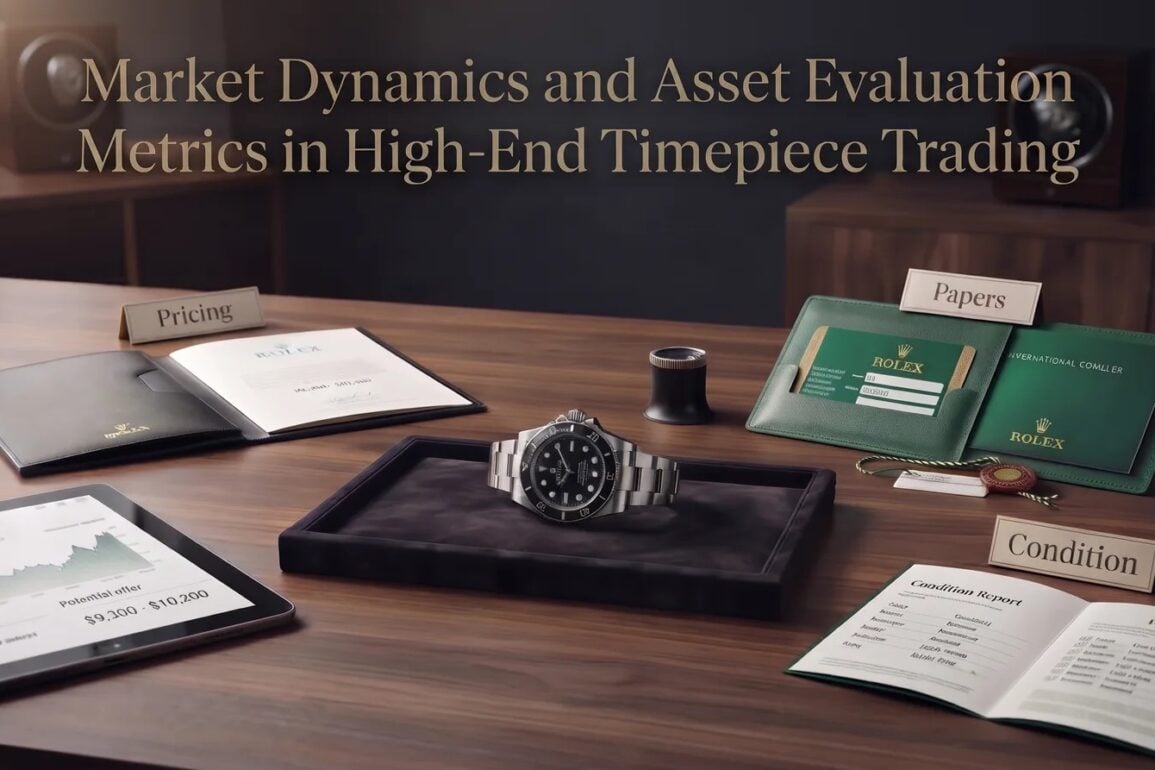
Selling a Rolex can be an opportunity to recover a significant portion of the money invested in a luxury watch, but the amount you receive depends on more than the name printed on the dial. Factors such as the model, current market demand, original documentation, physical condition, and service history can all influence a buyer’s offer. Understanding these details before approaching a dealer or private buyer can help you set realistic expectations and make a more informed decision.
Rolex watches are known for their craftsmanship, durability, and long-standing reputation in the luxury market. However, not every model retains its value in the same way, and two watches that appear nearly identical may receive different offers because of their age, configuration, accessories, or condition.
If you are preparing to sell a Rolex, knowing what buyers evaluate can make the process more straightforward. This guide explains how pricing works, why papers matter, which condition issues affect value, and how to prepare your watch for a competitive offer.
Understanding What Determines a Rolex’s Resale Value
The resale value of a Rolex is influenced by several factors that buyers consider together rather than independently. A popular model in excellent condition may attract strong interest, while a less sought-after reference could take longer to sell even if it is well maintained.
Model and Reference Number
The model is one of the first details a buyer will consider. Rolex produces watches for different purposes and preferences, including sports models, dress watches, and professional timepieces. The Submariner, Daytona, GMT-Master II, Datejust, and Oyster Perpetual can appeal to different groups of buyers.
However, a model name alone does not establish its value. The reference number identifies the specific configuration, including details such as the case material, bezel, dial, and movement generation. Small differences between references can influence desirability and price.
For example, a stainless steel sports model may attract a different audience from a precious-metal version. Likewise, certain dial colors, discontinued configurations, or limited-production variations may command stronger interest when demand is high.
Before requesting an appraisal, identify the reference number and gather any available purchase records. This information helps a buyer evaluate the exact watch rather than relying on a broad estimate based on its model family.
Age and Production Era
A watch’s age can affect its value, but older does not automatically mean more valuable. Some vintage Rolex watches are highly sought after because of their rarity, originality, or historical significance. Others may be less desirable because they were produced in large quantities or have features that appeal to a smaller market.
Collectors often pay close attention to originality. An older watch with its original dial, hands, bezel, and other appropriate components may attract more interest than one that has undergone substantial modifications. At the same time, a properly maintained vintage watch can be appealing even when it shows normal signs of age.
Buyers may also consider whether a model is still in production. Discontinued models can become more desirable in certain circumstances, but their resale performance depends on actual collector interest rather than discontinuation alone.
Current Market Demand
Luxury watch prices change over time. Demand, availability, economic conditions, and buyer preferences can all affect the offers available for a particular Rolex.
A model that attracted substantial attention several years ago may have a different market position today. Similarly, a watch that was once relatively easy to find could become more desirable if supply decreases or collector interest increases.
For this reason, online asking prices should not be treated as guaranteed resale values. A listing represents what a seller hopes to receive, not necessarily what a buyer has paid. Completed sales and recent dealer transactions generally provide more useful context.
When comparing prices, look for watches with the same reference, material, dial configuration, and approximate condition. A broad comparison between different Rolex models can produce misleading expectations.
How Rolex Papers and Original Accessories Affect an Offer
Documentation is another important part of the valuation process. Buyers want confidence that the watch is authentic and that its identifying details are consistent. Original papers and accessories can help establish that confidence, although their influence varies by model and buyer.
The Importance of the Original Warranty Card
A Rolex warranty card may include information that helps connect the watch to its original sale. Depending on its age and documentation format, it can provide details such as the model or reference, serial number, and purchase date or authorized retailer information.
When the card corresponds to the watch, it can make the resale process more convenient. It may also make the watch more appealing to buyers who prefer a complete set, especially in markets where collectors place a premium on documentation.
However, a warranty card does not replace authentication. Buyers still need to examine the watch and confirm that its components and identifying details are consistent with an authentic Rolex.
If the original card is missing, that does not automatically make the watch difficult to sell. Many legitimate pre-owned watches change hands without their original documentation. The effect on the offer depends on the model, available verification options, and the buyer’s requirements.
Boxes, Booklets, and Purchase Receipts
The original Rolex box, instruction booklets, tags, and purchase receipt can contribute to a more complete presentation. Some collectors enjoy owning the accessories that accompanied the watch when it was new, while other buyers focus primarily on the watch itself.
A complete set may help differentiate one listing from another, particularly when two watches have similar specifications and condition. Nevertheless, the extra value of accessories is not necessarily equal to their original retail cost.
Keep any accessories you still own, even if they appear unimportant. A buyer may prefer to evaluate the complete package before deciding on an offer.
Receipts and service invoices can also be useful. They may document the purchase history, previous maintenance, or repairs performed by a qualified service provider. Such records can help answer questions about the watch’s history and provide additional confidence during the transaction.
What If You No Longer Have the Papers?
Losing the papers is common, especially when a watch has been owned for many years or received as a gift. It does not mean you should assume the watch has little value.
Instead, concentrate on providing the information you do have. Share the model and reference number, disclose any known service history, and allow a reputable buyer to inspect the watch. If you have purchase receipts, insurance records, or previous service documents, bring those as well.
Avoid trying to recreate missing documentation or purchasing papers that do not legitimately belong to your watch. Incorrect or mismatched documents can raise concerns and complicate authentication.
The most useful approach is transparency. An honest explanation of what is available allows a buyer to evaluate the watch on its actual merits.
Why Condition Plays Such a Significant Role
Physical and mechanical condition can make a substantial difference to the offer you receive. Rolex watches are designed for long-term use, but normal wear, accidental damage, and previous repairs can affect their desirability and the cost of preparing them for resale.
Case and Bracelet Wear
Buyers inspect the case, bracelet, clasp, bezel, and other external components for signs of wear. Small scratches and light marks are common on pre-owned watches. Deeper scratches, dents, corrosion, or damaged components may have a greater impact on value.
The bracelet is particularly important because it is exposed to regular movement and contact with surfaces. Stretch in an older bracelet, missing links, a loose clasp, or damaged screws can affect both appearance and function.
If you still have the original bracelet links that were removed for sizing, include them when presenting the watch. Missing links may limit how comfortably the watch fits a future owner and could create an additional expense for the buyer.
Do not assume that every cosmetic imperfection needs to be repaired before requesting an offer. A buyer may prefer to evaluate the watch in its existing state and decide whether any work is worthwhile.
Polishing and Original Finishes
Polishing can improve the appearance of a watch by reducing visible scratches, but excessive polishing may also affect its value. Rolex cases have specific shapes, edges, and finishing patterns that can be altered if too much material is removed.
Collectors may pay particular attention to the sharpness of the lugs, the definition of the case edges, and whether brushed and polished surfaces retain their intended appearance. A watch that has been repeatedly refinished may be less attractive to buyers who prioritize originality.
If the watch has scratches, resist the temptation to have it aggressively polished simply to make it look newer. Ask an experienced professional whether any cosmetic work is appropriate before authorizing it.
A lightly worn watch with its original contours intact may be preferable to a heavily polished example that looks shiny but has lost some of its original definition.
Mechanical Performance
A Rolex can look excellent externally while still needing mechanical attention. Buyers may check whether the watch winds properly, keeps time within expected parameters, and performs its basic functions.
Depending on the model, they may examine the crown, date change, chronograph, bezel, or other features. Moisture exposure, a damaged crystal, irregular timekeeping, or a malfunctioning complication can affect the valuation.
A watch that needs servicing is not necessarily unsellable. However, the buyer may account for the expected repair cost, the possibility of additional problems discovered during servicing, and the time required to return the watch to a suitable condition.
If you know the watch has a mechanical issue, disclose it before completing the transaction. Clear communication can prevent disagreements after the buyer has inspected the watch.
Should You Service Your Rolex Before Selling It?
Servicing can be beneficial, but it is not always the most economical step before selling. A professional service may improve mechanical performance and provide documentation, yet the expense may not be fully reflected in the final offer.
Before paying for repairs, compare the likely service cost with the potential effect on resale value.
When Servicing May Make Sense
A recent service from Rolex or a qualified watchmaker can be reassuring, particularly if it is supported by an invoice or service record. Documentation may show what work was performed and when the watch was inspected.
Service may be worth considering if the watch has a serious functional problem, if the issue significantly limits buyer interest, or if a reputable buyer advises that repair would materially improve its marketability.
However, the decision should be based on the watch’s actual condition and the cost of the work. An expensive repair on a modestly valued model may not produce a corresponding increase in the offer.
When You Should Get an Offer First
In many cases, requesting an appraisal before servicing is the more practical approach. A buyer can assess the watch as it stands and explain whether a repair is necessary for the intended transaction.
This can be especially helpful for vintage pieces. Replacing original components during a service could affect collector interest, depending on the watch and the parts involved.
Avoid authorizing unnecessary work simply because you believe a pristine appearance will guarantee a higher price. Get a clear estimate, understand which components would be replaced or refinished, and consider whether the expense is justified.
Where to Sell a Rolex and Compare Offers
Once you understand the watch’s characteristics, the next decision is choosing where to sell it. Different sales channels offer different balances of convenience, speed, potential payout, and personal involvement.
Selling to a Professional Watch Dealer
A professional dealer may offer a relatively straightforward transaction. The dealer evaluates the watch, verifies its authenticity, considers its resale potential, and provides an offer.
One advantage is convenience. You generally do not need to create listings, manage buyer messages, arrange shipping to individual customers, or negotiate with multiple people. A reputable dealer should also explain the payment process and any conditions attached to the offer.
The offer may be lower than the price a dealer eventually receives from a retail customer. Dealers have operating expenses and must account for inventory risk, authentication, potential repairs, and the time required to resell the watch.
If you want to sell my rolex without managing a private sale, comparing offers from established watch buyers can help clarify the market value of your particular model. Request a written offer where possible and confirm whether the amount depends on an in-person inspection.
Selling Through a Private Buyer
A private sale may offer the possibility of receiving more than a dealer’s purchase offer, but it typically involves more responsibility.
You may need to research comparable sales, create a detailed listing, respond to questions, verify prospective buyers, and arrange a secure transaction. Buyers may also negotiate aggressively or request additional authentication before paying.
Fraud prevention is essential. Be cautious of unusual payment arrangements, requests to ship a watch before funds are confirmed, overpayment schemes, or pressure to complete a transaction immediately.
For higher-value watches, consider a secure meeting location or a reputable escrow or specialist transaction service. Confirm that any payment is final and independently verified before releasing the watch.
Selling Through a Consignment Service
With consignment, a specialist typically markets the watch to potential buyers on your behalf. The service may handle photography, listing creation, buyer communication, and parts of the transaction.
The main attraction is that the watch may reach a wider audience than a direct dealer purchase. Depending on the provider and its customer base, this can be useful for uncommon references or watches that appeal to collectors.
However, consignment is not the same as receiving an immediate purchase offer. You may have to wait for a buyer, pay a commission, and accept contractual conditions regarding pricing, insurance, and the return of unsold inventory.
Before agreeing, ask about the commission structure, expected selling timeline, insurance coverage, and whether you retain control over the final selling price.
How to Compare Rolex Offers Fairly
Receiving multiple offers is one of the best ways to understand what your watch may be worth. A single offer provides a starting point, but it does not necessarily represent the highest available amount.
Compare the Same Watch Specifications
Whenever possible, provide every buyer with the same information. Include the reference number, approximate age, dial configuration, available accessories, known service history, and any condition issues.
If one buyer believes the watch is in excellent condition while another identifies a mechanical problem, their offers may not be directly comparable. A consistent description helps reduce these differences.
You should also distinguish between a preliminary online estimate and a firm offer following inspection. Some buyers provide an initial range based on photographs and basic information, then revise it after examining the watch in person.
Understand Deductions and Fees
Ask whether the quoted amount is the final amount you will receive. Some transactions may involve commissions, shipping costs, authentication fees, or other deductions.
For a direct purchase, confirm whether the buyer intends to pay the quoted price after verification or whether additional inspection conditions apply. For consignment, calculate the expected proceeds after the commission and any agreed expenses.
The highest advertised price is not necessarily the best option if it includes substantial fees or depends on conditions that are difficult to satisfy.
Evaluate the Buyer’s Reputation
A strong offer is valuable only if the transaction is secure and the buyer follows through. Look for a clear business identity, established contact information, a documented purchasing process, and credible customer feedback.
Ask how the watch will be authenticated, when payment will be made, and what happens if the buyer changes the offer after inspection. A reputable buyer should be willing to explain these details without creating unnecessary pressure.
Avoid handing over the watch without a clear record of the transaction. Written terms and a receipt can help establish what was agreed, particularly when the watch is valuable.
Preparing Your Rolex for an Appraisal
A little preparation can make an appraisal more efficient and help ensure that the buyer has the information needed to evaluate the watch.
Start by gathering the watch, original box, warranty card, spare bracelet links, booklets, receipts, and service documentation. You do not need to have every item, but presenting what remains available gives the buyer a clearer picture of the package.
Next, identify the model and reference number if possible. If you are uncertain about a detail, avoid guessing. A specialist can help verify the configuration during inspection.
Clean the watch gently with an appropriate soft cloth if it is suitable to do so, but avoid abrasive products, household chemicals, or attempts to repair damage yourself. Do not immerse the watch in water unless its water resistance and condition have been properly established. Age, prior damage, and worn seals can make water exposure risky.
Take clear photographs of the dial, case, bracelet, clasp, and any visible damage if you are requesting an online estimate. Good photographs can support an initial assessment, although they cannot replace an in-person inspection or appropriate authentication.
Finally, be ready to explain what you know about the watch’s ownership and history. If it was a gift or inherited, it is perfectly reasonable not to know every detail. Share accurate information rather than making assumptions about its service history or originality.
Common Mistakes That Can Reduce Your Final Offer
Several avoidable mistakes can make selling a Rolex more complicated than necessary.
One common problem is setting the asking price based on the highest online listing. An ambitious asking price may not reflect what buyers are actually paying, particularly when the comparison watch has a different reference, condition, or accessory set.
Another mistake is concealing damage or mechanical problems. Buyers may identify these issues during inspection, leading to a revised offer or a canceled transaction. Honest disclosure usually creates a more productive negotiation.
Some sellers also spend money on unnecessary repairs before understanding the market. Replacing parts, polishing the case, or paying for a full service may not produce enough additional value to justify the cost.
Finally, rushing to accept the first offer can mean missing a better opportunity. Unless there is an urgent need to sell, compare several reputable buyers and ask questions about the final payment, inspection process, and any deductions.
FAQs
Can I sell a Rolex without its original papers?
Yes. A Rolex can often be sold without its original warranty card or box. The watch will still need to be evaluated for authenticity, condition, and market demand. Missing papers may affect the offer for certain models, especially when collectors prefer complete sets, but it does not automatically make the watch unsellable.
Does a Rolex lose value if it has scratches?
Not necessarily, but scratches and other signs of wear can influence the offer. Light surface marks are common on pre-owned watches, while deep scratches, dents, corrosion, and damage to important components may have a greater effect. Buyers also consider whether the case has been excessively polished.
Is a serviced Rolex worth more?
A documented service can increase buyer confidence and make a watch easier to evaluate. However, the service cost is not always recovered through a higher offer. The impact depends on the model, its existing condition, the service provider, and the work performed.
How do I know if a Rolex offer is fair?
Compare offers from several reputable buyers and use recent sales of the same reference as a benchmark. Make sure the watches being compared have similar configurations, condition, and accessories. Ask whether each offer is preliminary or final and whether any fees or